The search for truth and how you test your assumptions.
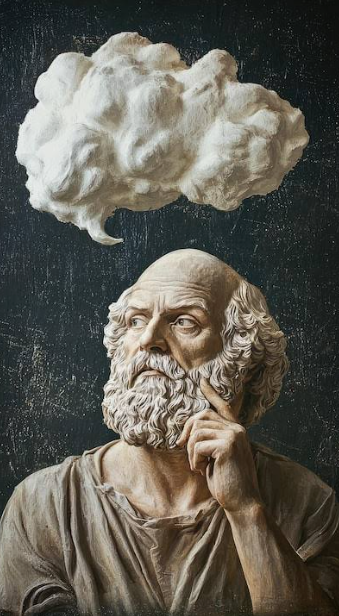
Epistemology is a branch of Philosophy that is the study of knowledge. It searches for things like how do you know if something is true? How do you know if your evidence is good (or useful) or not? How much evidence do you need to be certain of a belief? What's the difference between belief and knowledge?
The way I like to think of this is: How do you test your assumptions? And have you tested your assumptions? Another way of talking about this might be: if you and I disagree what evidence could we use to test to see if either of us is correct, or more correct?
A form of Epistemology is the Socratic Method. The Socratic Method is named after a Greek Philosopher Socrates (470-399 BC). The Socratic Method is a way of exploring ideas through carefully asking and answering questions. The aim of the questions in the Socratic Method is to find or discover the truth.
The Socratic Method asks questions like: why do you believe that? What do you mean by that? What evidence supports your claim? Could there be another explanation? If that’s true, then what follows? Are there exceptions?
There are systems of self defense that are sports. These are generally called combat sports. Some examples of combat sports include wrestling, boxing, judo, jiu jitsu, sambo, kickboxing, mma (mixed martial arts). Competition is a very strong way to test if moves work on resisting opponents, but there are rules for people’s safety. Sparring is another for of epistemology when it comes to martial arts. My opinion is that sparring and or competitions with the fewest restrictions (or rules) is the most effective method for testing assumptions.
Through sparring and competition we can find out what works the best. Which techniques are the most worthwhile to get good at, and are therefore what you should practice the most. It will tell us if we are good at certain moves or not. Which moves work most of the the time versus only some of the time. Also what works best for untrained people vs people that are highly trained.
In my own Jiu Jitsu training I have used this in many ways, but here are a couple of stark examples that stick out in my mind. When I was a Blue Belt I recognized that I rarely submitted anyone with armbar from my guard. So the assumption is that the armbar from guard is a good (highly effective) move. But my own personal anecdotal evidence is that the move sucks and it doesn’t work on anybody! I can watch other people in my gym using the technique with success, you also see it in competition, and MMA fights, also there are untold number of videos of the moves success on youtube videos of street fights. So the move must be good, it must be me that sucks at executing the move. Which is a good news, bad news situation! I remember at this time I wasn’t yet training with Team Rhino, but as I traveled for work I would drop in when I could. I went to Professor Keith Owen, once I had this realization and I described to him my issue. Keith told me he had the same issue when he was a Blue Belt and he showed me a different entry to the armbar. I practiced the entry and started getting it on some people, then more, until it became a legitimate tool in my tool kit. This process proved to me that the armbar was a good move from guard. Once I started getting success with this entry it opened my eyes up to why I wasn’t having success before, and helped me to rethink how to submit people. This exercise in testing my assumptions, not only unlocked a move for me, but unlocked a completely new way of thinking about Jiu Jitsu.
I had a couple more of these assumptions that were transformative to my Jiu Jitsu as a Purple Belt. One such example is very similar to my armbar experience was collar chokes. I noticed that some Jiu Jitsu players used a lot of collar chokes and some didn’t, but most of the advanced practitioners were at least decent at them. Yet I sucked at collar chokes. I think after having a similar experience before, it probably short cutted this learning curve for me. Through these two experiences I learned a ton about setting traps, set ups, timing and efficiency.
These have been solid lessons for my Jiu Jitsu, but also have translated to all of my life. Although sometimes I think that my insistence on efficiency and efficient systems can drive Mrs. Jungle Cat Crazy!
Here is some more evidence for seeking truth and wisdom:
Proverbs 4:5–7 (ESV)
"Get wisdom; get insight; do not forget, and do not turn away from the words of my mouth... Wisdom is the principal thing; therefore get wisdom: and with all thy getting get understanding." (KJV)
James 1:5 (ESV)
"If any of you lacks wisdom, let him ask God, who gives generously to all without reproach, and it will be given him."
Proverbs 18:15 (ESV)
"An intelligent heart acquires knowledge, and the ear of the wise seeks knowledge."
Proverbs 15:14 (ESV)
"The heart of him who has understanding seeks knowledge, but the mouths of fools feed on folly."
Proverbs 3:13–18 (ESV)
"Blessed is the one who finds wisdom, and the one who gets understanding..."
2 Peter 3:18 (ESV)
"But grow in the grace and knowledge of our Lord and Savior Jesus Christ."
Proverbs 9:10 (ESV)
"The fear of the Lord is the beginning of wisdom, and the knowledge of the Holy One is insight."
~ Jungle Cat


