Efficiency
According to the Cambridge dictionary efficiency is the quality of achieving the largest amount of useful work using as little energy, fuel, effort, etc. as possible.
And chat GPT says: “Efficiency is the ability to achieve a result while using the least possible amount of time, effort, energy, or resources.
A simple way to think about it is:
Efficiency = Useful output ÷ Input (resources used)
The higher the output for the same input—or the lower the input for the same output—the more efficient something is.
Examples
At work: Completing a task in 2 hours instead of 4 while maintaining the same quality is more efficient.
In machines: A fuel-efficient car travels more distance using less fuel.
In physics: Efficiency is the ratio of useful energy or work output to the total energy input, usually expressed as a percentage:
Efficiency=Total InputUseful Output×100%
For example, if a machine receives 100 J of energy and produces 80 J of useful work, its efficiency is 80%.”
In Jiu Jitsu efficiency can be thought about in a few ways: Time - how long does it take you to execute a move. Movement - how much movement does it take to execute a move. Effort - how much effort does it take to execute the move. Now all of the concepts can also be compared in drilling vs against a resisting opponent.
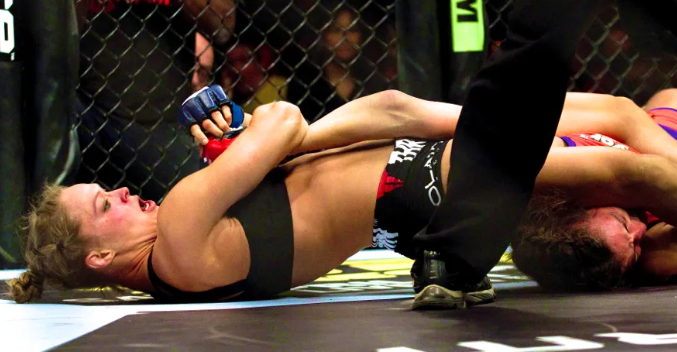
Let's review an example of an armbar from guard. There are a lot of ways to armbar an opponent from guard, but let me describe one of the ways.
1 Isolate and control an arm.
2 Bring elbow of controlled arm to or lightly passed your centerline
3 Put foot (controlled arm side) in opponent’s hip
4 Use foot to move head and shoulders away from foot into a side crunch
5 The other leg comes up and clamps the opponent's posture down.
6 Control arm with a cross grab (if you are armbarring right arm, control with your right arm)
7 Push face with other arm’s hand (cross face)
8 Bring leg with foot in the hip over opponent’s head (don’t cross your feet)
9 Pinch knees together
10 Raise hips to break arm
There are a few more details I could have added (a couple of extra steps), but this hopefully illustrates a way that we might learn a move in jiu jitsu. We as instructors tend to teach this way broken down into a lot of steps, because it generally helps to illustrate the details about the move that are instrumental in the move working correctly. In practice however I don’t perform an armbar against an opponent in this way. I try to use as few moves as necessary to accomplish my goals. What this looks like in a practical way is to practice these steps until I can accomplish them in one smooth movement. Once I can do the move smoothly without breaks in the application, then I can begin to practice with speed. Because if my opponent knows what I am going to do they will try to stifle my efforts. Because I want to be able to do the move on a resisting opponent, once I can do the move smooth and fast, then I need to try against someone that wont let me do it to them. My skill in the application alone can improve my speed and decrease the level of effort it takes to do the move.
It goes further than that though. Sometimes during a live round or in a match, or even in a fight, my opponent (or attacker) might put their own arm across my center, and they might have a posture that would be right for an arm lock attack. If I can see this coming, and capitalize on the moment, my opponent can cut the time and effort it takes to perform the move way down for me. This is what intermediate application of Jiu Jitsu looks like in my opinion. Which is considerably more efficient than beginner step by step application of the move.
The next step is the advanced approach which is to steer the opponent into the correct position without them realizing. As you advance in your Jiu Jitsu journey you will have your own ways of doing this steering. Another way to think of this is to set traps, although I think steering is a more fitting way of looking at this. Here is an example of what I would consider steering: I raise my knees into a high guard, so that my opponent will drive my legs back down with either their hands or elbows, which gives me an opportunity to grab a deep collar grip. I start to take an angle for an arm attack now, knowing that my opponent is likely to strip my collar grip across his body with two hands, as this is happening I am already raising my hips and finishing my turn for the arm lock. My opponent does half the work for me, and because I know it’s coming I am finishing the armbar before they know they have even fallen into the attack.
The longer that you intentionally practice certain moves, the more ways you will have to steer opponents into your attacks, but you have to get good at the move first. I think what this leads to if you have enough good attacks and sweeps is that you can sense where your opponent is going and see the path before they do, and easily steer them into traps in the way they already want to go. I also think this process is generally true for defense and escapes.
Here is some more to think about:
Ephesians 5:15–16
“Look carefully then how you walk, not as unwise but as wise, making the best use of the time…”
Proverbs 21:5
“The plans of the diligent lead surely to abundance, but everyone who is hasty comes only to poverty.”
Proverbs 24:27
“Prepare your work outside; get everything ready for yourself in the field, and after that build your house.”
~Jungle Cat


